Skytsengel
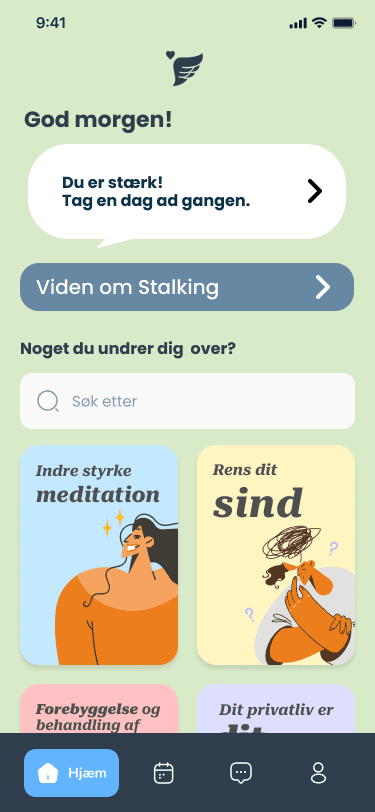
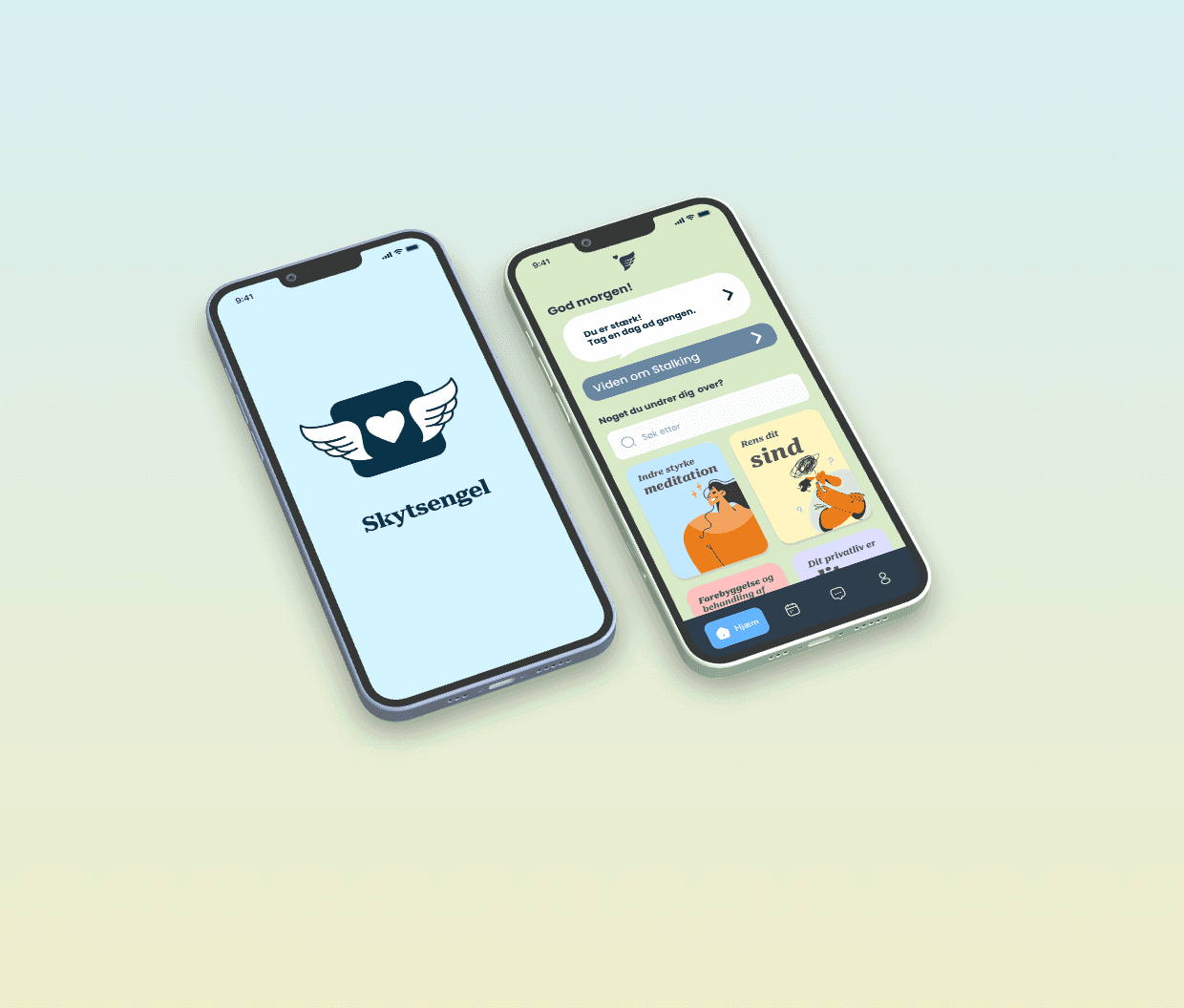
A redesign of Dansk Stalking Center's Skytsengel app, transforming it from a safety tool into a broader support ecosystem for people experiencing stalking.
Challenge
Skytsengel was originally designed to help stalking victims quickly contact their personal network during emergencies and document incidents for police purposes. Through research, we discovered an important limitation: many victims did not have a strong support network to rely on.
The challenge became: How can Skytsengel support stalking victims who feel isolated while providing guidance and information, without creating a false sense of security?
Process
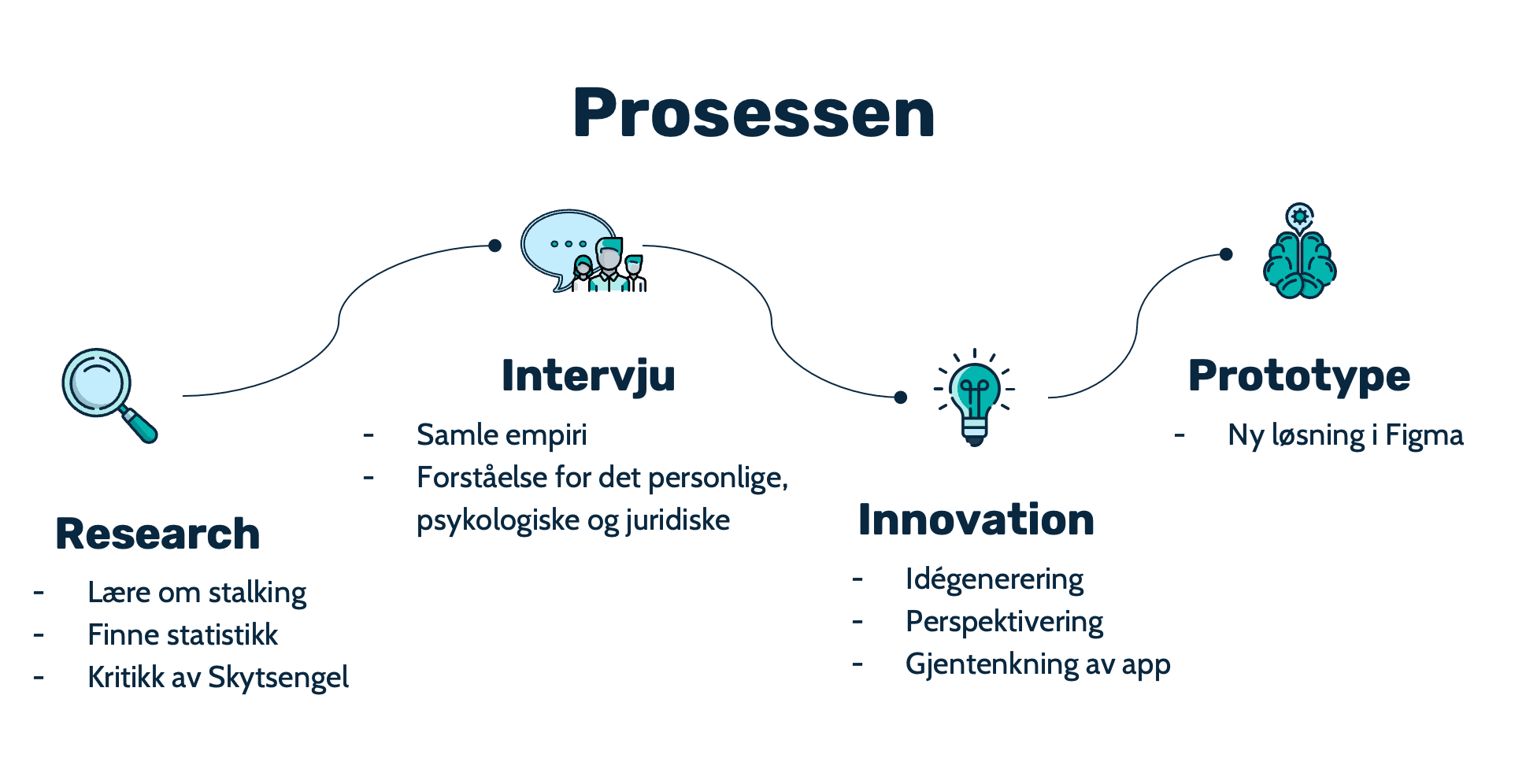
We began by building an understanding of stalking and evaluating the existing Skytsengel app to identify usability issues and limitations.
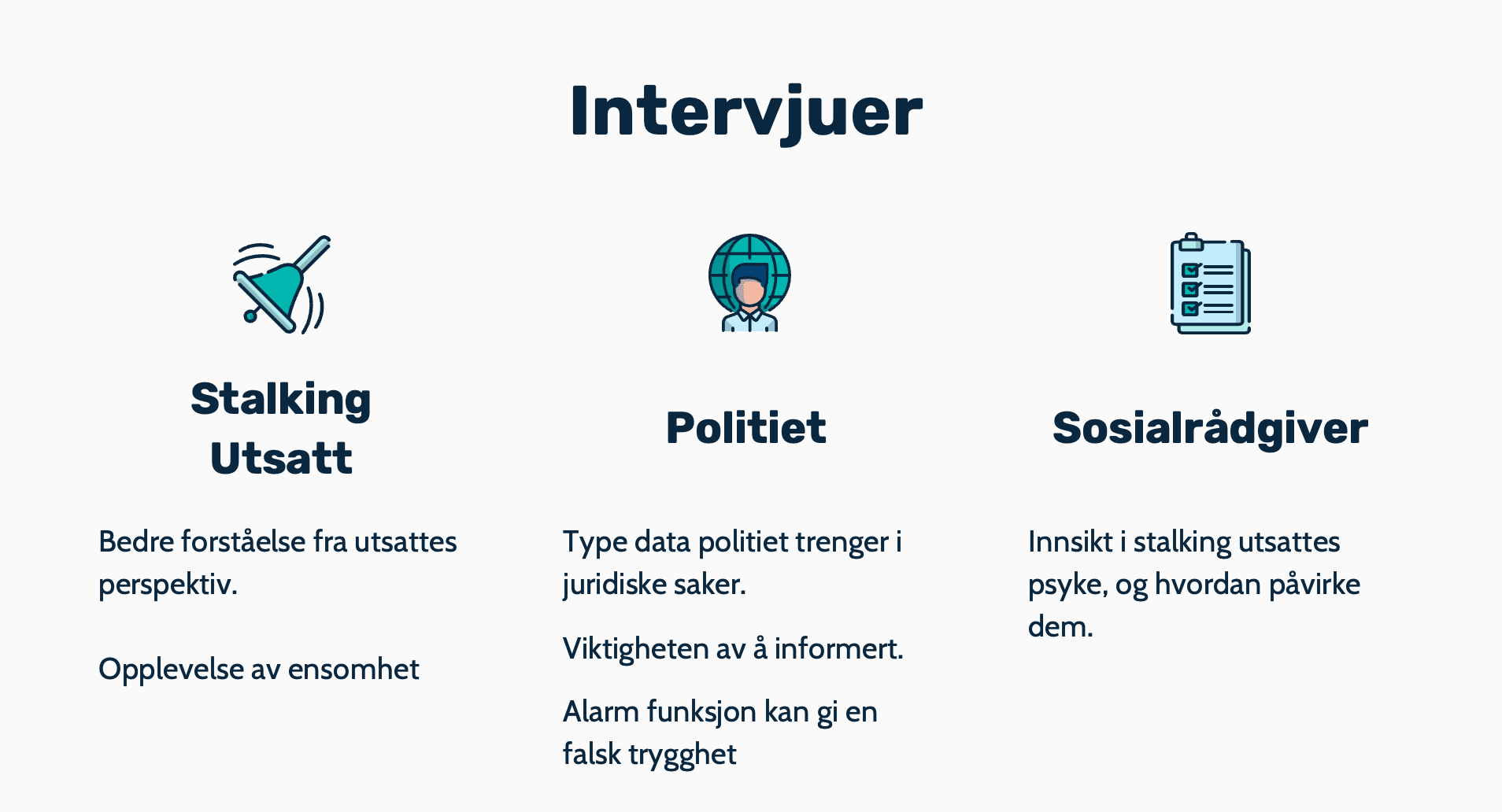
I designed the interview guide and helped conduct five semi-structured interviews with people involved in stalking cases: two individuals with lived experience of stalking, a representative from Dansk Stalking Center, a police officer working with stalking cases, and a psychologist.
Because of the sensitive nature of the topic, we focused on creating a flexible interview structure and adapting conversations based on participants' comfort levels. One participant was recruited through Dansk Stalking Center, while another was contacted directly after sharing their experience through a book and podcast.
Through qualitative coding, we identified recurring themes around isolation, the need for understanding and support, and the importance of ethical safety features.
Using these insights, we redesigned the core concept through ideation workshops and developed a clickable Figma prototype.
Outcome
The final concept shifted Skytsengel from primarily being an emergency tool into a support ecosystem focused on three areas: emotional support, knowledge about stalking, and safe community connection.
The redesigned concept included daily supportive content, mindfulness exercises, educational resources, moderated support groups, professional guidance, and improved incident documentation.
The prototype was presented to Dansk Stalking Center, who responded positively and highlighted that a solution like this could be valuable for supporting people affected by stalking.
The project taught me the importance of precision and care when designing for sensitive situations. With more time, I would continue by testing the prototype with users and refining the functionality of the final product.