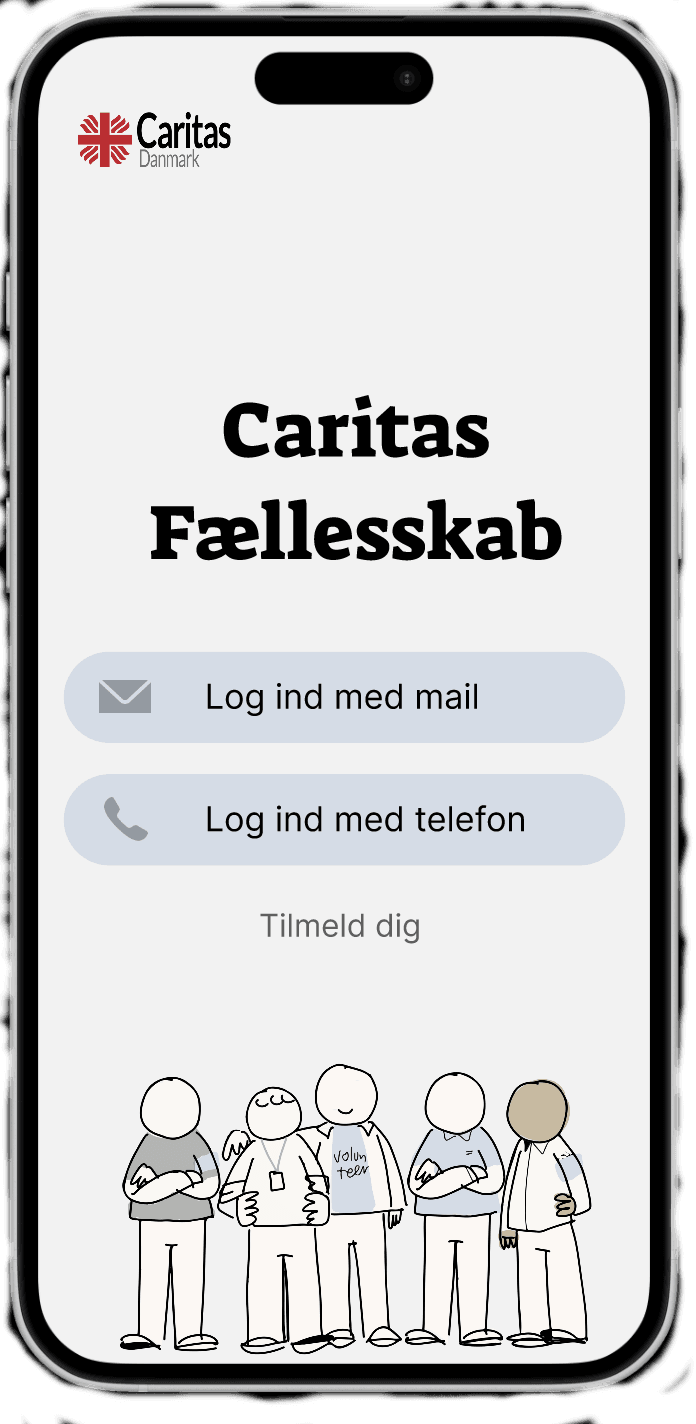
Caritas Fællesskab
Caritas Fællesskab is a digital platform concept created for Caritas Danmark, exploring how technology can support senior communities while respecting existing social practices and individual needs.
Challenge
The challenge was understanding how digital technology could support senior communities without replacing the physical interactions and social practices that already created value.
Rather than designing technology for seniors as passive users, the project explored how seniors could become active contributors in shaping technology that reflects their own communities.
Process
Discovery
We used a design ethnographic approach, immersing ourselves in Caritas Denmark's senior communities through observations, conversations, and informal interactions. We intentionally used the term conversations rather than interviews, as these meetings were designed to happen in the participants' own environments and allow them to guide the direction of the discussion.
Co-design
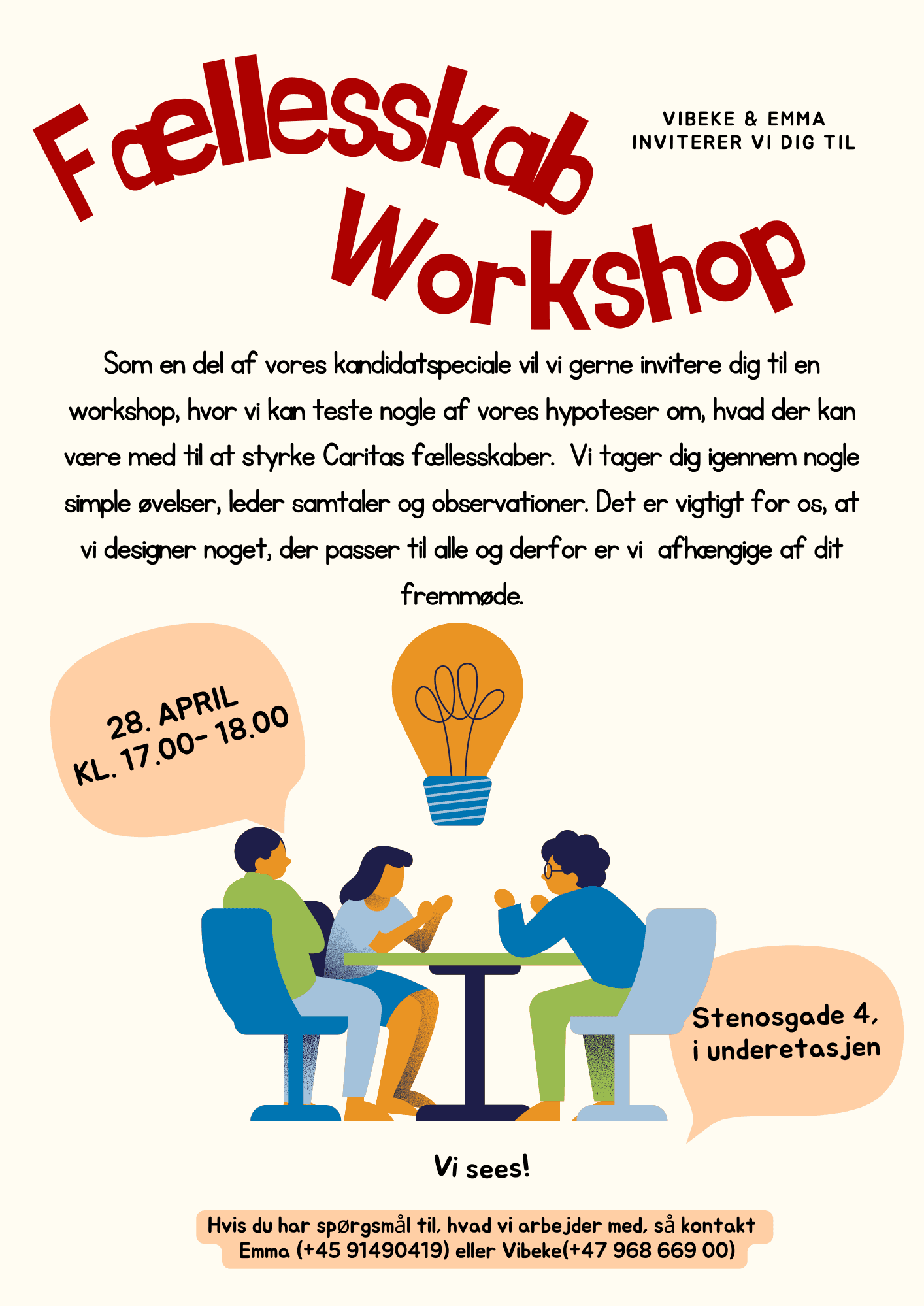
The insights from the conversations informed a co-design workshop with members of Caritas Denmark's senior communities. Using picture cards, value timelines, and scenario-based discussions, participants helped explore how digital technology could meaningfully support their existing practices.
Analysis
By analyzing conversations and workshop findings, we identified key needs around communication, personalization, accessibility, and maintaining the value of physical gatherings.
Outcome
The outcome was a set of six design guidelines for a unified digital platform: fostering connection, supporting rather than replacing activities, ensuring accessibility, enabling personalization, providing timely communication, and creating spaces for member interaction.
To demonstrate how these principles could be applied, we created Caritas Fællesskab — a clickable Figma prototype for a digital community platform. The prototype was presented to Caritas Danmark and members of the senior communities, receiving very positive feedback. Caritas is currently exploring the possibility of deploying the concept in the future.
A key learning from the project was the importance of designing with communities rather than simply designing for them. The project strengthened my understanding of participatory design, ethical research, and creating technology that respects existing human connections.